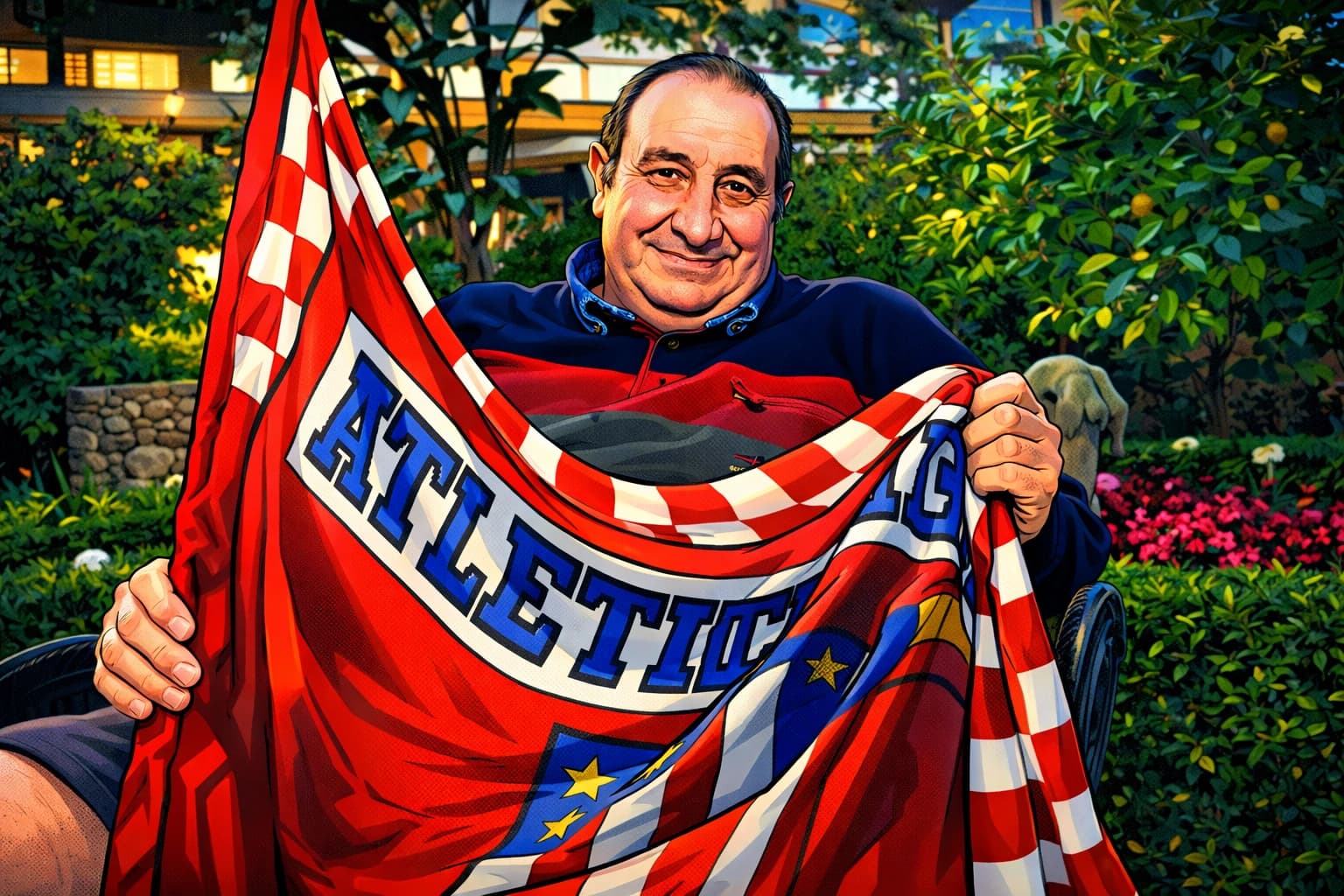
Jesus Gil turned Atletico Madrid into his personal kingdom, firing 39 coaches in 16 years while simultaneously serving as a mayor. His reign was marked by trophies, controversies, and an ego that knew no bounds.
In the pantheon of eccentric football club owners, few can match the sheer audacity and chaos of Jesus Gil y Gil. A construction magnate turned politician turned football dictator, Gil's 16-year reign at Atletico Madrid was defined by spectacular trophies, scandalous controversies, and a coaching carousel that made a mockery of managerial stability. He fired 39 coaches during his time at the club – an average of more than two per season – while simultaneously serving as the mayor of Marbella and facing multiple criminal investigations. This is the story of football's most outrageous owner.
The Man Behind the Madness
Jesus Gil was born in 1933 in Burgos, Spain. He made his fortune in construction during Franco's era, building apartments and developments across Spain. But Gil wasn't content with just being rich – he wanted power, fame, and control. In 1991, he was elected mayor of Marbella, the luxurious Costa del Sol resort town, running on a populist platform that promised jobs and prosperity. He delivered on those promises through a combination of aggressive development, questionable financial practices, and sheer force of personality.
But being a mayor wasn't enough for Gil's ego. He wanted to be a football president. In 1987, he purchased a majority stake in Atletico Madrid, one of Spain's biggest clubs but at the time struggling both on and off the pitch. Gil promised to restore Atletico to glory. And in his own chaotic, controversial way, he did exactly that.
The Philosophy of Power
 Jesus Gil ruling Atletico with an iron fist
Jesus Gil ran Atletico Madrid like a dictatorship. He was the president, but he acted like an emperor. Every decision, no matter how small, required his approval. He attended training sessions, berated players publicly, hired coaches on whims, and fired them just as quickly. He gave interviews constantly, using the media to promote himself and attack anyone who dared to question him.
His management style was simple: if things went well, it was because of his genius; if things went badly, it was the coach's fault. This philosophy led to the most remarkable statistic in football management history: 39 different coaches in 16 years. That's not a typo. Gil hired and fired coaches with the frequency most people change clothes.
Some coaches lasted months, others weeks. A few lasted just days. Luis Aragones, one of Spanish football's most respected figures, was hired and fired by Gil four separate times. Radomir Antic, who would later lead Atletico to a historic double, was sacked despite being in the middle of a successful season because Gil didn't like his press conference comments. The coaching job at Atletico became football's most dangerous position – guaranteed to end in humiliation within months.
The Trophy Years
Despite the chaos, Gil's Atletico Madrid actually won trophies. This is what makes his story so remarkable – the madness worked, at least sometimes. In 1991, Atletico won the Copa del Rey. In 1996, under Radomir Antic, they achieved the impossible: winning both La Liga and the Copa del Rey, a double that hadn't been achieved by anyone other than Real Madrid or Barcelona in decades.
The 1995-96 season was Atletico's greatest achievement of the modern era. They overcame the dominance of Barcelona and Real Madrid to claim the league title in dramatic fashion. Gil, predictably, took all the credit. He declared himself a genius, the greatest president in football history. When Antic tried to suggest that perhaps the players and coaching staff deserved some recognition, Gil fired him the following season.
Atletico also won the Copa del Rey again in 1996 and reached the UEFA Cup Winners' Cup final in 1998. These were genuine achievements, proof that despite Gil's chaotic management style, talented players could still succeed. But every trophy came with a caveat – it was achieved despite Gil, not because of him.
The Criminal Investigations
While Gil was busy running Atletico and serving as Marbella's mayor, Spanish authorities were investigating his business practices. Gil's construction empire and his management of Marbella's finances were both subjects of multiple criminal probes. He was accused of embezzlement, corruption, misappropriation of public funds, and various other financial crimes.
In 1992, Gil was temporarily banned from holding public office. In 2002, he was sentenced to prison for misuse of public funds, though he never served time due to health issues and legal appeals. His business empire crumbled, and many of the developments he built in Marbella were found to be illegal constructions on protected land.
At Atletico, Gil's financial practices were equally questionable. The club accumulated massive debts under his ownership, with much of the money going into player transfers that often seemed designed more to make headlines than to build a sustainable team. When Gil finally left Atletico in 2003, the club was in financial ruin, despite the trophies won during his era.
The Coaching Graveyard
Let's return to those 39 coaches, because the list itself is a testament to Gil's madness. Here are just some of the managers who suffered under his reign:
-
Luis Aragones: Hired and fired four separate times, Aragones somehow kept coming back despite knowing exactly what he was getting into. He won trophies with Atletico but was never given the respect or stability he deserved.
-
Radomir Antic: Led Atletico to their historic 1995-96 double, only to be fired the following season when results dipped slightly. Antic would later say that working under Gil was "like living in a mental asylum."
-
Arrigo Sacchi: The legendary Italian coach who had won European Cups with AC Milan lasted just three months at Atletico before Gil decided he wasn't good enough.
-
Cesar Luis Menotti: Argentina's World Cup-winning coach arrived at Atletico with a huge reputation and left within a year, humiliated and defeated by Gil's interference.
 Paulo Futre and Jesus Gil – A complicated relationship
- Paulo Futre: The Portuguese legend returned to Atletico as a coach in 1999 but lasted just three months. Even former players weren't safe from Gil's axe.
The average tenure of an Atletico Madrid coach under Gil was approximately six months. Some lucky ones lasted a full season. Most didn't make it past Christmas. The constant turnover made it impossible to build any long-term strategy or develop young players. Everything was reactive, chaotic, and driven by Gil's whims.
The Media Circus
Gil loved the media, and the media loved Gil – he was pure entertainment. His press conferences were legendary spectacles where he would attack referees, opposing players, his own players, coaches, journalists, and anyone else who displeased him. He once called Real Madrid "a bunch of crybabies" and suggested that Barcelona's success was due to "Catalan conspiracy."
He appeared on talk shows, gave inflammatory interviews, and used his position to promote his political career. Being Atletico's president wasn't just about football for Gil – it was about maintaining his brand as Spain's most controversial public figure. Every scandal, every firing, every outrageous comment kept him in the headlines, which was exactly where he wanted to be.
The Fall
 A young Fernando Torres in Segunda Division – The lowest point
Gil's reign at Atletico finally ended in 2003. His health was deteriorating, his legal problems were mounting, and the club's financial situation was catastrophic. Atletico was relegated to the Segunda Division in 2000 – a humiliating fall for one of Spain's biggest clubs – and while they returned to La Liga after one season, the damage was done.
Gil stepped down as president in 2003, though he maintained some influence behind the scenes. He died in 2004 at the age of 71, leaving behind a legacy of trophies, chaos, debt, and controversy. His funeral was attended by thousands, a mix of Atletico fans, Marbella residents, and curious onlookers who wanted to pay respects to one of Spain's most polarizing figures.
The Aftermath
After Gil's departure, Atletico Madrid spent years recovering from the financial mess he left behind. The club was bought by Miguel Angel Gil Marin (Jesus Gil's son) and other investors who worked to stabilize the finances and rebuild the team. It took nearly a decade, but Atletico eventually returned to prominence, winning La Liga in 2014 and 2021, and reaching the Champions League final twice.
Today's Atletico Madrid is a model of sustainable success under Diego Simeone's management – a stark contrast to the chaos of the Gil years. Simeone has been at the club since 2011, something that would have been unthinkable under Jesus Gil. The stability has brought consistent success and restored Atletico's reputation as one of Europe's top clubs.
The Legacy of a Madman
Jesus Gil's legacy is complicated. He brought trophies to Atletico Madrid during an era when Real Madrid and Barcelona dominated Spanish football. He gave the club moments of glory that fans still cherish. But he also left the club in financial ruin, created a toxic culture of instability, and turned the coaching position into a revolving door that made long-term planning impossible.
His record of 39 coaches in 16 years will likely never be broken – and most clubs would never want to try. It stands as a monument to ego, impulsiveness, and the belief that one man's will can overcome any obstacle. Sometimes it worked. Often it didn't. But it was never boring.
Gil represents a type of football owner that we rarely see anymore: the dictator president who ran the club as his personal kingdom. Modern football, with its corporate structures and financial regulations, makes it harder for such figures to exist. But in the 1990s, Gil was king of Atletico Madrid, and he ruled with an iron fist wrapped in ego.
Love him or hate him, Jesus Gil changed Atletico Madrid forever. He brought trophies, chaos, and unforgettable memories. He proved that you could win while being completely insane. And he showed that sometimes, in football, the journey is far more entertaining than the destination – even if that journey involves firing 39 coaches and running a football club like a Mediterranean dictatorship.