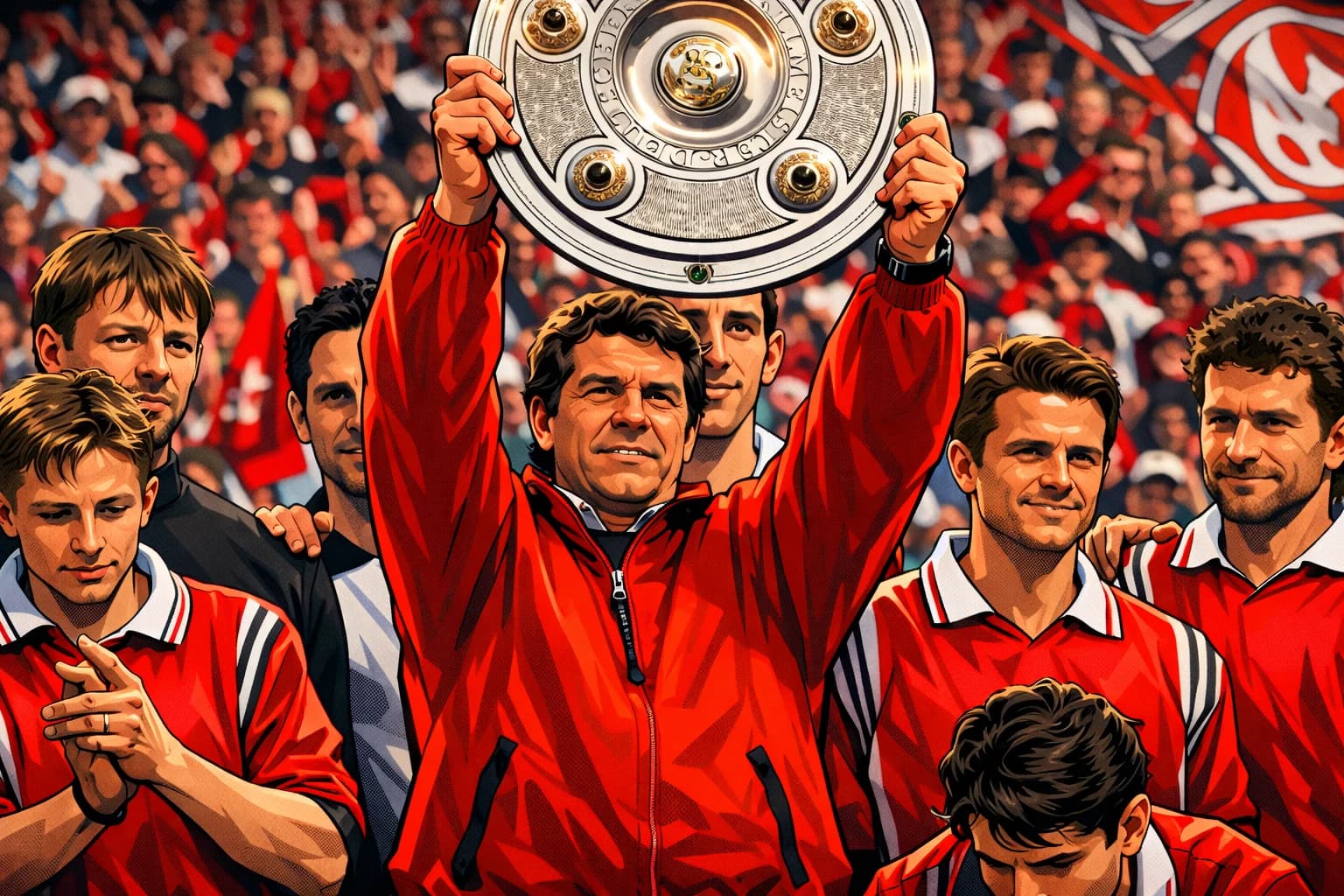
In 1998, newly-promoted Kaiserslautern achieved the impossible: winning the Bundesliga in their first season back in the top flight. It's a feat that has never been repeated and likely never will be.
In the history of football, there are upsets, there are miracles, and then there's Kaiserslautern 1997-98. When the small southwestern German club won promotion back to the Bundesliga in 1997, most expected them to struggle. A good mid-table finish would have been considered a success. Instead, they won the entire league. Not after years of building, not after spending millions on new players, but immediately – in their first season back. It's a feat so remarkable, so statistically improbable, that in the nearly three decades since, no team in any major European league has come close to repeating it.
The Fall Before the Rise
To understand Kaiserslautern's miracle, you need to understand the fall that preceded it. Just two years earlier, in 1996, Kaiserslautern had been relegated from the Bundesliga for the first time in their history. It was a shocking moment for a club that had won the German championship four times and had been a consistent presence in the top flight since 1963.
The relegation hurt. Kaiserslautern wasn't just any club – they were a traditional powerhouse with a passionate fanbase and a proud history. Their stadium, the Fritz-Walter-Stadion, was named after one of German football's greatest legends, the captain of West Germany's 1954 World Cup-winning team. To drop into the second division felt like a betrayal of that legacy.
But the club didn't panic. They kept faith in their coach, Otto Rehhagel, a gruff, experienced manager who had built his reputation on getting results through discipline and tactical intelligence. Rehhagel promised he would bring them back up, and he delivered. In 1996-97, Kaiserslautern dominated the second division, winning promotion at the first attempt with a squad that was largely unchanged from the team that had been relegated.
The 1997-98 Season Begins
When Kaiserslautern returned to the Bundesliga in 1997, expectations were modest. The squad hadn't been significantly reinforced – the club didn't have the money for major signings. Most pundits predicted a season of consolidation, with survival being the primary objective. Bayern Munich, Borussia Dortmund, and other big clubs were expected to compete for the title. Kaiserslautern? They were just happy to be back.
The season started promisingly. Kaiserslautern won their opening match against Freiburg 1-0, with striker Olaf Marschall scoring the only goal. It was a good start, but nothing that suggested what was to come. Then they beat Wolfsburg. Then they drew with Bayern Munich. Then they kept winning.
By October, people started paying attention. Kaiserslautern wasn't just surviving – they were thriving. They were playing with confidence, organization, and a fearless attitude that confused opponents. Teams that expected an easy victory against the newly promoted side found themselves outfought and outplayed.
The Rehhagel System
Otto Rehhagel's tactical approach was the foundation of Kaiserslautern's success. He didn't have superstars, but he had a system that maximized the abilities of the players he did have. His formation was pragmatic – usually a 4-4-2 or 4-5-1 depending on the opponent – and focused on defensive solidity, quick transitions, and exploiting set pieces.
Rehhagel's teams were notoriously difficult to break down. They defended as a unit, pressed intelligently, and rarely gave opponents space to operate. When they won the ball, they transitioned quickly, using the pace of wingers like Ciriaco Sforza and the finishing ability of Marschall to punish teams on the counter-attack.
But the system was only part of the story. Rehhagel also created an incredible team spirit. The players believed in each other, fought for each other, and refused to accept that they were inferior to the bigger clubs. This mentality, combined with Rehhagel's tactical discipline, made Kaiserslautern a nightmare to play against.
The Key Players
While Kaiserslautern didn't have household names, they had players who were perfectly suited to Rehhagel's system:
Olaf Marschall was the team's top scorer with 21 goals. A classic striker who thrived on service from midfield, Marschall had a knack for being in the right place at the right time. His goals often came at crucial moments, and his celebration – a simple raised fist – became iconic during that season.
Ciriaco Sforza, the Swiss midfielder, was the team's creative heartbeat. He provided the link between defense and attack, controlled the tempo of matches, and delivered dangerous set pieces. His experience and leadership were invaluable to a team of relative underdogs.
Andreas Brehme, the World Cup-winning left-back, brought experience and quality to the defense. Though past his peak years, Brehme's reading of the game and technical ability were still top-class. His presence gave the team credibility and showed younger players what winning mentality looked like.
Goalkeeper Andreas Reinke was the last line of defense and made countless crucial saves throughout the season. His consistency and shot-stopping ability kept Kaiserslautern in games when opponents created chances.
The Title Race
As the season progressed, it became clear that Kaiserslautern wasn't going away. They weren't just competing for a European spot – they were in the title race. Bayern Munich, the perennial favorites, found themselves in an unexpected battle with the promoted side.
The turning point came in March 1998, when Kaiserslautern traveled to Bayern Munich for a crucial match. A loss would have effectively ended their title hopes. Instead, they won 1-0, with Marschall scoring the decisive goal. It was a statement victory that showed they belonged at the top.
From that point, Kaiserslautern never looked back. They maintained their position at the top of the table, grinding out results even when they didn't play their best football. The belief within the squad grew with each passing week. What had started as an improbable dream was becoming reality.
The Final Day Drama
On the last day of the season, Kaiserslautern needed just a draw at home to VfL Wolfsburg to secure the title. The Fritz-Walter-Stadion was packed with 38,000 fans, all dreaming of witnessing history. The atmosphere was electric, a mix of hope, nerves, and disbelief that their team was 90 minutes away from achieving the impossible.
The match was tense. Wolfsburg, fighting to avoid relegation themselves, weren't about to roll over. For 71 minutes, the score remained 0-0. The tension in the stadium was unbearable. Then, in the 72nd minute, Olaf Marschall broke free and scored. The stadium erupted. Fifteen minutes later, Pavel Kuka added a second goal. Kaiserslautern had won 4-0. They were champions of Germany.
The scenes that followed were unforgettable. Players collapsed in tears, fans invaded the pitch, and Otto Rehhagel, the man who had led them through relegation and back to glory, was lifted onto the shoulders of his players. Kaiserslautern had done what no promoted team had ever done before – they had won the Bundesliga in their first season back.
Why It Can Never Be Repeated
The Kaiserslautern miracle of 1997-98 is often called the greatest underdog story in Bundesliga history, and there's good reason to believe it will never be repeated. Modern football has changed in ways that make such a feat virtually impossible.
Financial Disparity: In 1998, the financial gap between Bundesliga clubs wasn't as extreme as it is today. Kaiserslautern could compete on relatively equal terms with bigger clubs. Today, promoted teams face opponents with vastly superior resources, making it almost impossible to sustain a title challenge over an entire season.
Squad Depth: Top clubs now have squads of 25+ quality players, allowing them to rotate and maintain performance across multiple competitions. Promoted teams simply cannot match this depth.
Scouting and Recruitment: Big clubs now have sophisticated scouting networks that identify and buy the best talents from smaller leagues. Promoted teams lose their best players before they can build around them.
Tactical Evolution: The game has become more complex, with data analysis and specialized coaching. Promoted teams need time to adapt to the tactical demands of top-flight football.
Since 1998, no promoted team in the Bundesliga has even come close to winning the title. Most are happy to finish in the top half. A few have qualified for Europe. None have challenged for the championship. The same is true in other major leagues – promoted teams occasionally surprise with good seasons, but winning the league immediately? It just doesn't happen anymore.
The Aftermath
The question everyone asked after Kaiserslautern's miracle season was: can they sustain it? The answer, sadly, was no. The following season, they finished mid-table. In 2000, they were relegated again. By the 2010s, they had dropped to the third division and faced financial collapse.
Otto Rehhagel left after just one more season to take over at Bayern Munich, though he would find his greatest success later with Greece, winning Euro 2004 in another miracle story. Many of the key players moved on to bigger clubs or retired. The magic that made 1997-98 special couldn't be recreated.
Today, Kaiserslautern plays in the 2. Bundesliga, far from the glory days. Financial problems and poor management have left them as a shadow of the club that once shocked German football. But the memory of that incredible season remains, a reminder of what's possible when belief, teamwork, and brilliant coaching come together.
A Legacy That Endures
Kaiserslautern's 1997-98 season is more than just a statistical anomaly – it's a story about the beauty of sport. It's proof that in football, at least for one magical season, the impossible can become reality. It showed that money and star names aren't everything, that tactics and team spirit can overcome superior resources, and that dreams, no matter how improbable, can come true.
The phrase "Die Roten Teufel" (The Red Devils) has never sounded more appropriate than in 1998. Kaiserslautern didn't just win the Bundesliga – they made history. They achieved something that no team had done before and, in all likelihood, no team will ever do again. They are proof that football, despite all its modern changes and financial realities, can still produce miracles.
And on that final day in May 1998, when Olaf Marschall's goal hit the back of the net and 38,000 people roared in disbelief and joy, Kaiserslautern proved that sometimes, just sometimes, the fairy tale is real.