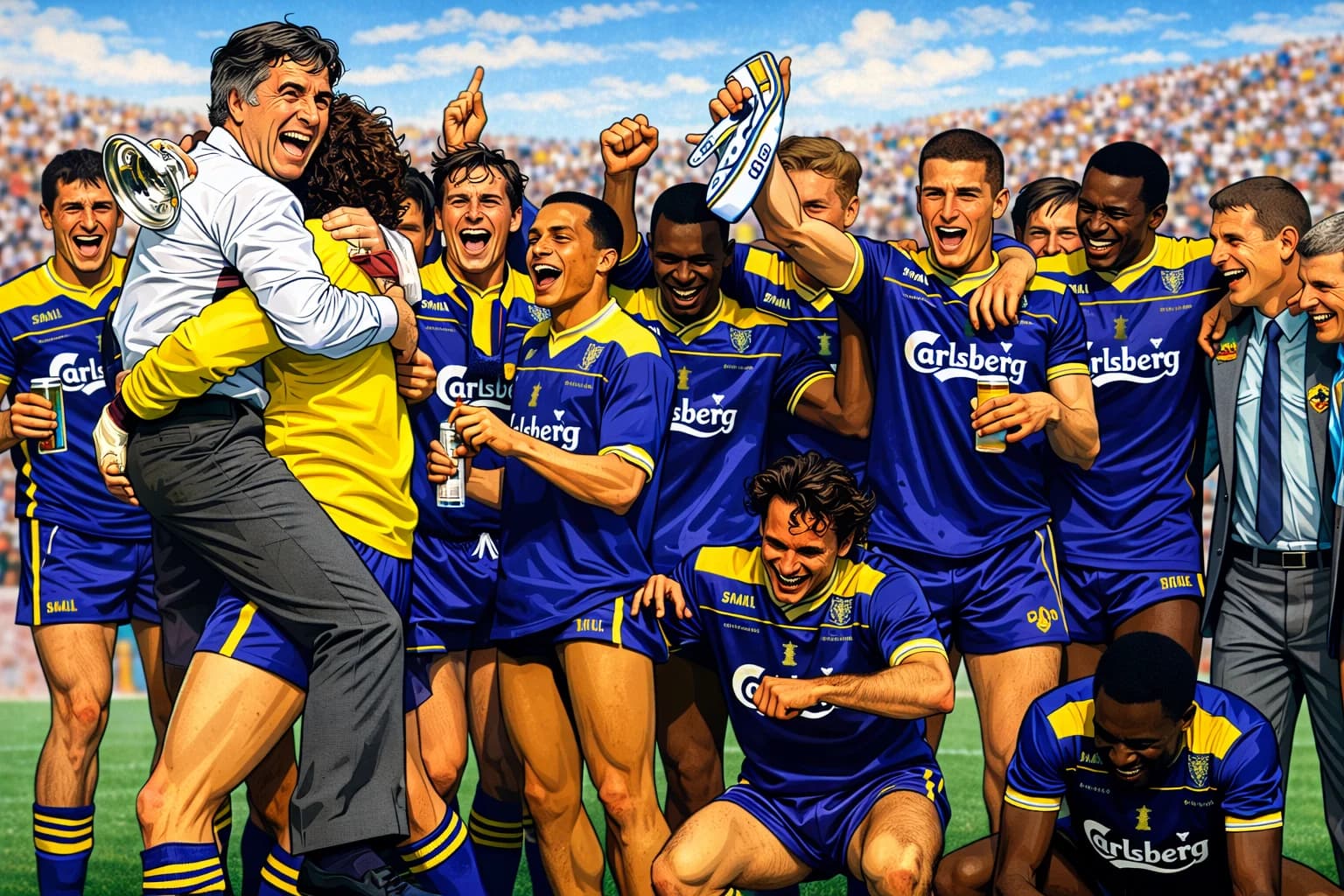
From non-league to FA Cup winners in just nine years, Wimbledon FC's rise was football's greatest underdog story. Then they vanished, relocated to Milton Keynes, and became a cautionary tale about losing your soul.
The story of Wimbledon FC is unlike any other in English football history. In 1977, they were a non-league club playing in front of a few hundred fans. By 1986, they were in the top division. By 1988, they had won the FA Cup, beating the mighty Liverpool in one of the competition's greatest upsets. And by 2004, they had ceased to exist, relocated 60 miles away to become a completely different club. It's a story of triumph, controversy, heartbreak, and one of the most bitter disputes in British football history.
The Crazy Gang is Born
Wimbledon FC's rise began in the most unlikely of places: the Southern League, English football's semi-professional tier. In 1977, they won election to the Football League Fourth Division, replacing Workington. It was a huge moment for the small South London club, but nobody could have predicted what would happen next.
The club's chairman, Sam Hammam, a Lebanese businessman with big dreams and little money, decided that conventional football wisdom didn't apply to Wimbledon. They couldn't outspend bigger clubs, so they would out-work them. They couldn't attract superstars, so they would create a team culture so intense, so aggressive, and so unconventional that opponents would be intimidated before kick-off.
This philosophy gave birth to the "Crazy Gang," a nickname that Wimbledon embraced with pride. The players weren't the most talented in the league, but they were the toughest, the most determined, and the most willing to push the boundaries of acceptable behavior. They played on artificial turf at their tiny Plough Lane stadium, creating a home advantage that teams dreaded. They used psychological warfare, physical intimidation, and an absolute refusal to respect reputations.
The Rise Through the Leagues
Wimbledon's ascent was meteoric. They won the Fourth Division in 1983, reaching the Third Division. A year later, they won promotion to the Second Division. By 1986, just nine years after joining the Football League, they were in the top division for the first time in their history. It was the fastest rise from non-league to top-flight football ever recorded.
Their manager during this period, Dave Bassett, was the perfect fit for the club's philosophy. Bassett believed in hard work, discipline, and collective effort over individual skill. He created a siege mentality where Wimbledon saw themselves as outsiders fighting against an establishment that looked down on them. This us-against-the-world attitude became Wimbledon's greatest weapon.
The playing style matched the mentality. Wimbledon played direct football – long balls to big strikers, aggressive pressing, and physical challenges that tested the limits of the rules. It wasn't pretty, but it was effective. Opponents who expected to dominate possession found themselves in a battle they weren't prepared for. Critics called it anti-football. Wimbledon called it winning.
The FA Cup Miracle: 1987-88
By the 1987-88 season, Wimbledon had established themselves in the First Division, but they were still seen as the league's outsiders. Nobody gave them a chance when they began their FA Cup run. But cup competitions are where underdogs thrive, and Wimbledon were the ultimate underdogs.
They beat West Bromwich Albion, Mansfield Town, Newcastle United, Watford, and Luton Town to reach the final. Each victory was celebrated like a title win. By the time they reached Wembley, the entire nation – except Liverpool fans – was behind them.
The Final: David vs Goliath
On May 14, 1988, Wimbledon faced Liverpool in the FA Cup Final. Liverpool were the dominant force in English football, having won the league title, and were overwhelming favorites. They had world-class players like John Barnes, John Aldridge, and Peter Beardsley. Wimbledon had Vinnie Jones, a midfielder better known for his tackles than his technique.
Before the match, Liverpool's players were confident, almost dismissive. Some didn't even know the names of Wimbledon's players. But Wimbledon had a plan. Manager Bobby Gould (who had replaced Dave Bassett) and his players spent the week before the final studying Liverpool's weaknesses and preparing their mental game.
The Crazy Gang's pre-match psychological warfare was legendary. Vinnie Jones reportedly grabbed Liverpool's star striker John Aldridge and told him exactly what would happen if he tried anything. Dennis Wise, Wimbledon's diminutive midfielder, chatted constantly with Liverpool's players, trying to disrupt their focus. It was all part of the plan – get in their heads before the match even started.
The Match That Shocked Football
The final itself was tense and scrappy. Liverpool dominated possession as expected, but Wimbledon's defense, marshalled by the excellent goalkeeper Dave Beasant and defender Eric Young, held firm. Every Liverpool attack was met with fierce resistance. Every loose ball was fought for as if it was the last ball on earth.
In the 37th minute, Wimbledon won a free kick. Lawrie Sanchez, a midfielder who rarely scored, rose above the Liverpool defense to head home Dennis Wise's cross. 1-0 to Wimbledon. The underdog dream was alive.
Liverpool pushed for an equalizer, and in the 61st minute, they were awarded a penalty. John Aldridge, one of the most reliable penalty takers in England, stepped up. But Dave Beasant, Wimbledon's goalkeeper, had other ideas. He dived to his left and saved the penalty – the first goalkeeper ever to save a penalty in an FA Cup Final. The Crazy Gang's belief soared.
Liverpool threw everything at Wimbledon in the final half-hour. Shot after shot was blocked, cleared, or saved. Wimbledon's players threw their bodies in front of everything, defending as if their lives depended on it. When the final whistle blew, the impossible had happened. Wimbledon, nine years removed from non-league football, had won the FA Cup.
The Aftermath of Glory
Wimbledon's FA Cup triumph should have been the beginning of a golden era. Instead, it marked the start of a long, slow decline. The club qualified for Europe but struggled financially. Their Plough Lane stadium was small and outdated, generating little revenue. Sam Hammam tried to find solutions, but the club's location in South London, surrounded by bigger clubs like Chelsea, Arsenal, and Tottenham, made it difficult to build a sustainable fanbase.
The players who had won the FA Cup gradually moved on to bigger clubs. Vinnie Jones became a Hollywood actor. Dennis Wise joined Chelsea. The Crazy Gang mentality faded as the team changed. By the mid-1990s, Wimbledon was still in the Premier League (as the top division had been renamed) but the magic was gone.
The Relocation Controversy
In 2002, Wimbledon's ownership group, led by businessmen who had bought the club from Sam Hammam, proposed something unthinkable: moving the club to Milton Keynes, a town 60 miles north of London with no football tradition but plenty of potential for stadium development and commercial opportunities.
The proposal sparked outrage. Wimbledon fans were devastated. Moving a football club wasn't just relocating a business – it was destroying over 100 years of history, community, and identity. Fans protested, organized campaigns, and begged the Football Association to intervene. But the FA, citing the club's financial problems and the lack of a suitable stadium in Wimbledon, approved the move.
In 2003, Wimbledon FC played their last match at Selhurst Park (they had been ground-sharing with Crystal Palace since leaving Plough Lane). In 2004, they moved to Milton Keynes and were renamed Milton Keynes Dons (MK Dons). Wimbledon FC, the Crazy Gang that had won the FA Cup just 16 years earlier, ceased to exist.
AFC Wimbledon: The Phoenix Rises
The Wimbledon fans refused to accept the end. In 2002, while the relocation battle was still ongoing, a group of supporters founded AFC Wimbledon, a new club that would start from scratch in the ninth tier of English football. They vowed to reclaim their club's identity, history, and place in the football pyramid.
AFC Wimbledon's rise has been almost as remarkable as the original club's. They won promotion after promotion, climbing through the non-league system and back into the Football League by 2011. In 2016, they won promotion to League One, the third tier of English football. Against all odds, they had returned to a level where they could compete again.
The battle over Wimbledon's history has been bitter. AFC Wimbledon claims to be the true continuation of the original club, carrying its legacy and spirit. MK Dons, for years, claimed the old club's history as their own, displaying trophies and records from the Wimbledon FC era. Eventually, in 2007, after negotiations between the clubs and pressure from fans, MK Dons agreed to return all historical honors to the Wimbledon community, effectively acknowledging that AFC Wimbledon is the spiritual successor to Wimbledon FC.
The Legacy of the Crazy Gang
The story of Wimbledon FC is ultimately about two things: the beauty of the underdog and the tragedy of losing your soul. The Crazy Gang's rise from non-league to FA Cup winners in nine years is one of football's greatest achievements. It proved that with determination, teamwork, and a refusal to accept your supposed place in the hierarchy, anything is possible.
But the relocation to Milton Keynes is a cautionary tale about what happens when business interests override community and tradition. Football clubs aren't just businesses – they're cultural institutions, community anchors, and carriers of generational identity. When you move a club, you don't just relocate a team; you destroy something irreplaceable.
The Crazy Gang Today
Today, the legacy of the Crazy Gang lives on in two places. MK Dons plays in League One, a stable club with a nice stadium and no connection to the chaos and magic of the original Wimbledon. They've accepted their role as a completely different entity, focusing on building their own identity rather than claiming someone else's history.
AFC Wimbledon, meanwhile, carries the spirit of the original club. They play at Plough Lane again – a new stadium built on the site of the old one, opened in 2020. The fans who refused to give up have rebuilt their club from nothing, creating a modern-day example of supporter ownership and community football. They may not have the FA Cup trophy in their cabinet anymore, but they have something more important: their identity.
Remembering the Miracle
The 1988 FA Cup Final remains one of the competition's most iconic moments. Every year, footage of Lawrie Sanchez's header and Dave Beasant's penalty save is replayed, reminding new generations of fans that football can still produce miracles. The image of Wimbledon's players, many of whom would never play at that level again, celebrating with the trophy while Liverpool's superstars looked on in disbelief, encapsulates everything beautiful about sport.
Vinnie Jones, Dennis Wise, John Fashanu, Lawrie Sanchez, and the rest of the Crazy Gang weren't the most talented players in English football. But for one glorious season, they were the best team in the FA Cup. They proved that tactics, teamwork, and sheer bloody-mindedness could overcome superior skill and resources. They showed that reputations mean nothing on the day, and that any team, no matter how unfancied, can have their moment of glory.
The tragedy is that the club which achieved this miracle no longer exists in its original form. Wimbledon FC is gone, relocated and rebranded out of existence. But the memory remains, preserved by AFC Wimbledon and celebrated by football fans who understand that some stories are too important to forget. The Crazy Gang won the FA Cup, shocked the football world, and then disappeared into history. It's a story of triumph and tragedy, of underdogs and heartbreak, and of why football matters more than just what happens on the pitch.
In the end, Wimbledon FC's story teaches us that winning isn't everything. Identity, community, and belonging matter more than trophies. AFC Wimbledon may never win the FA Cup, but they've won something more important: they've reclaimed their soul. And that, more than any trophy, is a victory worth celebrating.