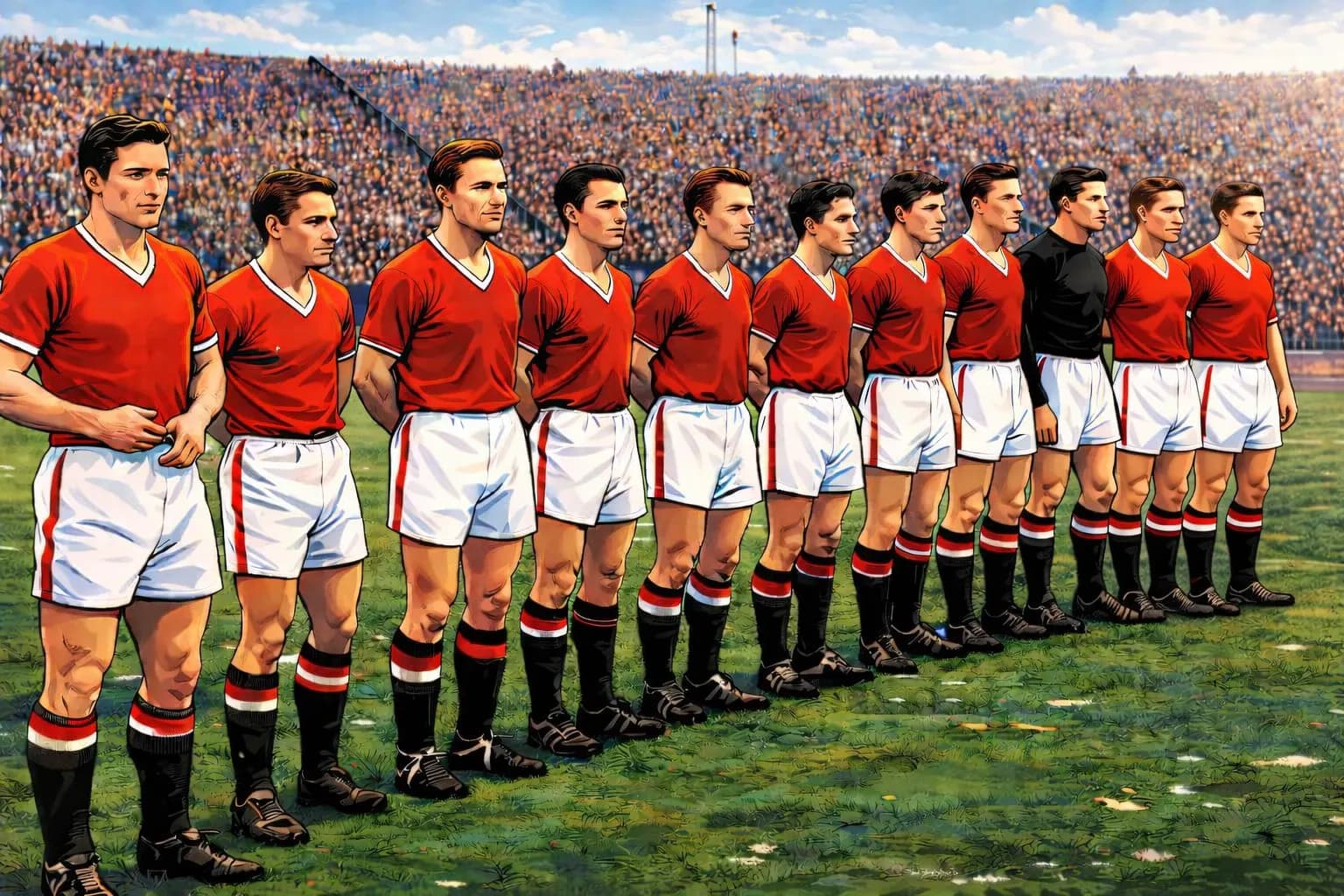
They were the future of English football—young, brilliant, and seemingly unstoppable. Matt Busby had built the most exciting team in Europe. Then, on a snowy runway in Munich on February 6, 1958, tragedy struck. Eight players died, and Manchester United was shattered. This is the story of the Busby Babes and the disaster that broke a nation's heart.
The Busby Babes: Manchester United's Tragic Glory
The snow fell gently on Munich-Riem Airport as British European Airways Flight 609 attempted its third takeoff. Inside were the champions of England—Manchester United's young stars, journalists, staff, and supporters returning from a triumphant European Cup quarter-final victory in Belgrade. It was February 6, 1958, at 3:04 PM.
The plane never made it off the runway.
Within seconds, 23 people were dead or dying. Among them were eight of Manchester United's finest players—young men who had captured the nation's imagination, players the media had christened "The Busby Babes." In an instant, one of football's greatest teams was destroyed, and British football lost a generation of talent that would never be replaced.
This is their story.
The Genius of Matt Busby
To understand the tragedy, you must first understand the glory. Matt Busby had taken over Manchester United in 1945, finding a club bombed during the war, playing at Maine Road because Old Trafford was damaged. Rather than sign established stars, Busby pursued a revolutionary vision: he would build a team of youth.
The policy was radical for its time. While other clubs bought success, Busby invested in United's youth academy, developing teenagers who would grow together into greatness. By the mid-1950s, his gamble had paid off spectacularly.
United won the First Division title in 1955-56 with an average age of just 22. They defended it the following year. The team played with a swashbuckling style that thrilled crowds—attacking football, technical brilliance, and youthful exuberance. They weren't just successful; they were beloved.
The media dubbed them "The Busby Babes," and the name captured their appeal. These weren't hardened professionals; they were boys playing the game with joy and skill that seemed almost innocent. Players like Duncan Edwards, a physical marvel at just 21, Tommy Taylor, Roger Byrne, Eddie Colman—these were names that sparked excitement across England.
Conquering Europe
In 1956-57, Manchester United became one of the first English teams to enter the European Cup, despite Football League opposition. Busby believed English football needed to test itself against continental giants, and he was right. United thrilled in Europe, their attacking style proving effective against sophisticated opposition.
By February 1958, they were chasing the treble—leading the league, through to the FA Cup fifth round, and into the European Cup quarter-finals. On February 5, they drew 3-3 with Red Star Belgrade in Yugoslavia, a result that put them through 5-4 on aggregate.
The team was jubilant. At 25, they were young, successful, and seemingly invincible. The future appeared limitless. They boarded the plane home with dreams of glory still dancing in their heads.
They would never complete the journey.
The Crash
The plane refueled in Munich, a routine stop on the way back to Manchester. Snow had begun falling, but conditions seemed manageable. At 2:30 PM, the pilots attempted takeoff. The engines failed to reach full power, and the attempt was aborted.
A second attempt at 2:34 PM had the same result. The pilots, concerned about something called "boost surging" in the engines, tried various solutions. Some passengers grew nervous, but the pilots assured them all was well.
At 3:04 PM came the third attempt. The plane accelerated down the runway, reaching the point of no return. Then disaster struck. Unable to achieve proper velocity, the aircraft couldn't lift off. It overran the runway, crashed through a fence, hit a house, and broke apart.
The front section where players and staff sat bore the worst impact. The carnage was immediate and horrific.
The Lost Generation
Eight players died either immediately or shortly after in hospital:
- Geoff Bent (25) - Left-back, killed instantly
- Roger Byrne (28) - Captain, killed instantly
- Eddie Colman (21) - Half-back known as "snakehips" for his dribbling, killed instantly
- Duncan Edwards (21) - Perhaps the greatest loss, the most talented player of his generation, died after fighting for 15 days
- Mark Jones (24) - Center-half, killed instantly
- David Pegg (22) - Winger, killed instantly
- Tommy Taylor (26) - Center-forward and England international, killed instantly
- Liam Whelan (22) - Inside forward, killed instantly
Three club staff members also perished: coach Bert Whalley, trainer Tom Curry, and secretary Walter Crickmer. Eight journalists died, including former England goalkeeper Frank Swift. Two crew members and two other passengers completed the death toll of 23.
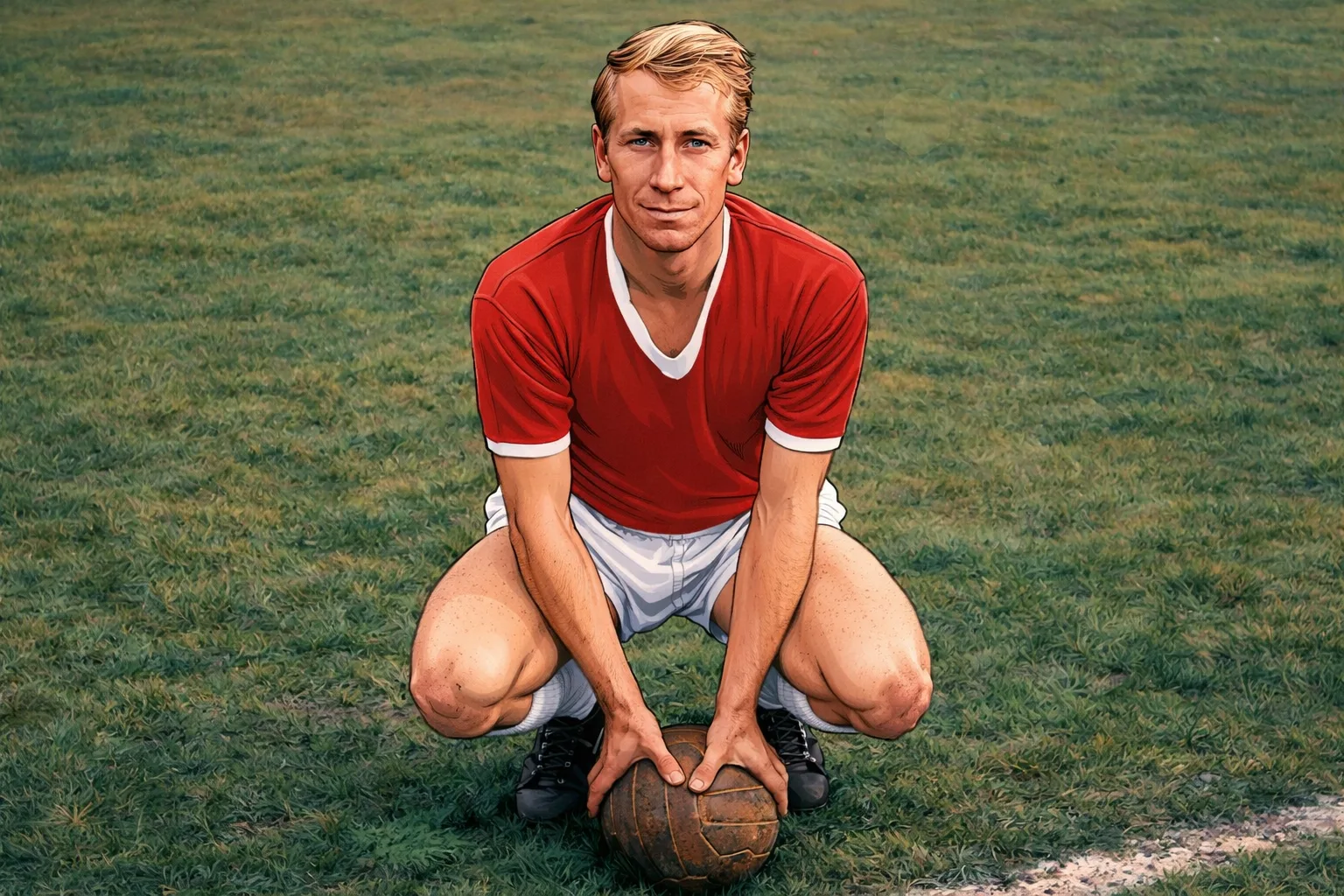 Bobby Charlton survived the tragedy to become a Manchester United legend
Manager Matt Busby suffered severe injuries and was twice given last rites. Bobby Charlton, then just 20, was thrown from the wreckage but survived with relatively minor injuries. Johnny Berry and Jackie Blanchflower survived but never played football again. Dennis Viollet, Albert Scanlon, Ken Morgans, and Ray Wood recovered and would play again.
A Nation Mourns
The news reached England that evening, spreading shock and grief across the country. This wasn't just a football tragedy; it felt personal. These young men had represented hope and joy in post-war Britain. Families had watched them grow from teenagers to champions. Now they were gone.
The funeral for Roger Byrne, Duncan Edwards, and others saw tens of thousands line the streets of Manchester. The country stood still. Even rival fans mourned. This transcended football—it was the loss of youth, potential, and innocence.
Duncan Edwards' death on February 21, after fighting bravely for 15 days, brought fresh waves of grief. At 21, he had already played 18 times for England and was considered the most complete footballer the country had ever produced. Jackie Charlton later said Edwards was "the only player that made me feel inferior."
His mother received a telegram from him after the crash—sent before takeoff—that arrived after his death. It read simply: "All flights cancelled flying tomorrow all my love Duncan xxx."
The Remarkable Recovery
Somehow, impossibly, Manchester United carried on. Jimmy Murphy, Busby's assistant who had missed the trip due to Wales duties, took charge. He cobbled together a team from reserves, youth players, and emergency signings. Just 13 days after the disaster, United played Sheffield Wednesday in the FA Cup.
Old Trafford fell silent before kickoff. Then Shay Brennan, a reserve making his debut, scored. The stadium erupted. Emotion poured from the stands. United won 3-0, and somehow, through tears and trauma, they reached the FA Cup final.
They lost 2-0 to Bolton, but reaching Wembley just months after Munich was achievement enough. The following season, though United finished second, the recovery had begun. Matt Busby, recovered from his injuries, returned to rebuild.
The Phoenix Rises
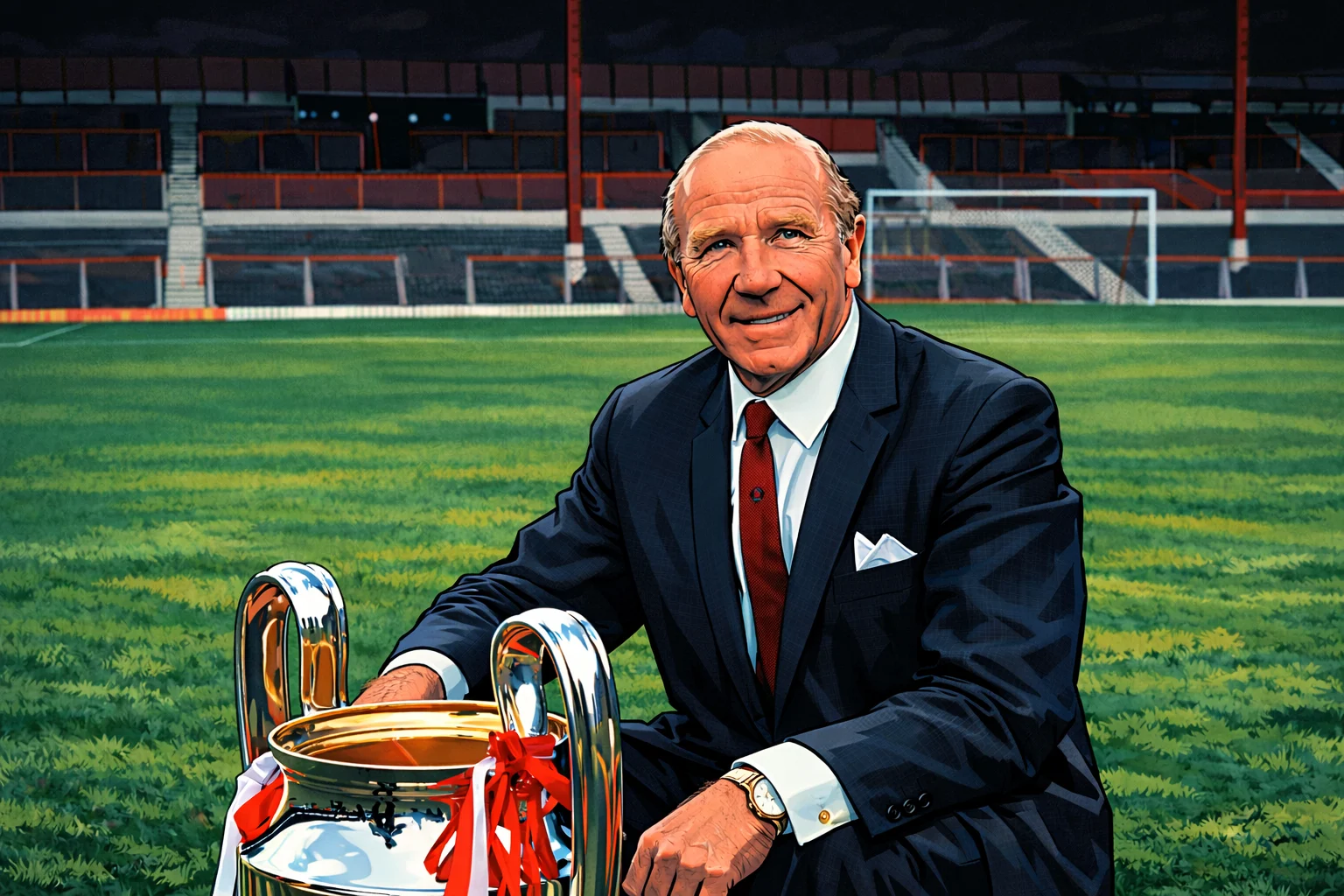 Matt Busby lifting the European Cup 10 years after the disaster
Ten years after Munich, on May 29, 1968, Manchester United defeated Benfica 4-1 to win the European Cup at Wembley. Bobby Charlton scored twice. Matt Busby watched his rebuilt team achieve what the Babes never could. George Best, Denis Law, and Charlton formed a new generation of brilliance.
As Charlton lifted the trophy, tears streamed down his face. He had survived Munich. Now he had fulfilled the promise of those who didn't. Busby became Sir Matt Busby. United became European champions. But the ghosts of Munich were never far away.
The rebuilt team featured survivors like Charlton, Foulkes, and Gregg, along with new stars. Yet everyone knew they were completing the Babes' unfinished business. The victory was as much memorial as celebration—honoring those who never got to see their promise fulfilled.
The Eternal Legacy
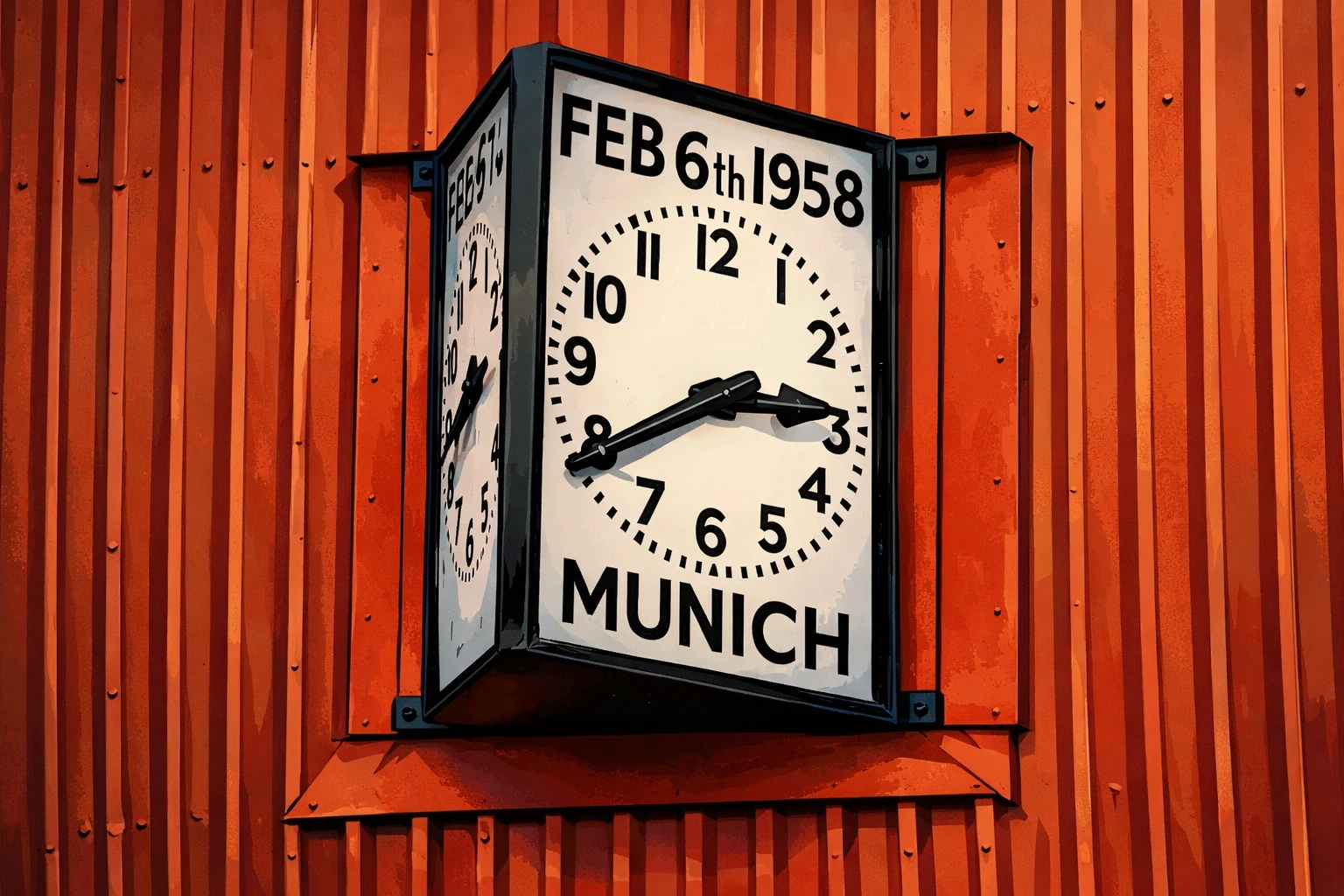 The Munich Clock at Old Trafford, forever stopped at the time of the crash
Today, a clock at Old Trafford stands permanently stopped at 3:04 PM—the moment of the crash. The Munich memorial outside the stadium bears the names of those who died. Every year on February 6, Manchester United honors their memory.
The tragedy changed football. It led to better safety regulations for air travel and prompted UEFA to implement travel guidelines for teams. It showed football's capacity for grief and its remarkable resilience.
For Manchester United, Munich remains central to their identity. The phoenix on their crest symbolizes rising from the ashes. The club's determination to succeed in Europe became almost spiritual—driven by memories of those who died chasing that dream.
What Might Have Been
The most haunting question is the simplest: what if? Duncan Edwards was 21 and considered potentially the greatest player ever to emerge from England. Tommy Taylor was in his prime. Eddie Colman's skill mesmerized crowds. Roger Byrne captained with authority beyond his years.
That team should have dominated English football for a decade. They should have conquered Europe multiple times. They should have formed the backbone of England's national team through the 1960s. Instead, their story ended on a snowy runway in Munich.
Experts and teammates later claimed that 1958 United side was better than the 1968 European Cup winners, despite Best, Law, and Charlton. The Babes combined youth, technical ability, physical power, and tactical sophistication rare for that era. They were ahead of their time.
Forever Young
There's something particularly tragic about young death. The Busby Babes never aged, never declined, never experienced football's cruel twilight years. They remain forever 21, 22, 25—forever in their prime, frozen in time as boys who conquered England and reached for Europe.
Their story isn't just about tragedy, though grief runs through it like a dark river. It's about ambition, excellence, and the beautiful game's capacity to inspire. It's about a visionary manager who dared to trust youth. It's about young men who played with joy.
Most of all, it's about how football can break your heart and somehow still be beautiful. How a club can be shattered yet survive. How tragedy can be transformed into legacy.
On February 6, 1958, the Busby Babes died. But their memory never will. Every time Manchester United walks onto the pitch at Old Trafford, every time they compete in the Champions League, every time they promote a young player from their academy—they honor those boys who boarded a plane in Belgrade and never made it home.
The flowers of Manchester. Forever blooming. Forever remembered. Forever young.